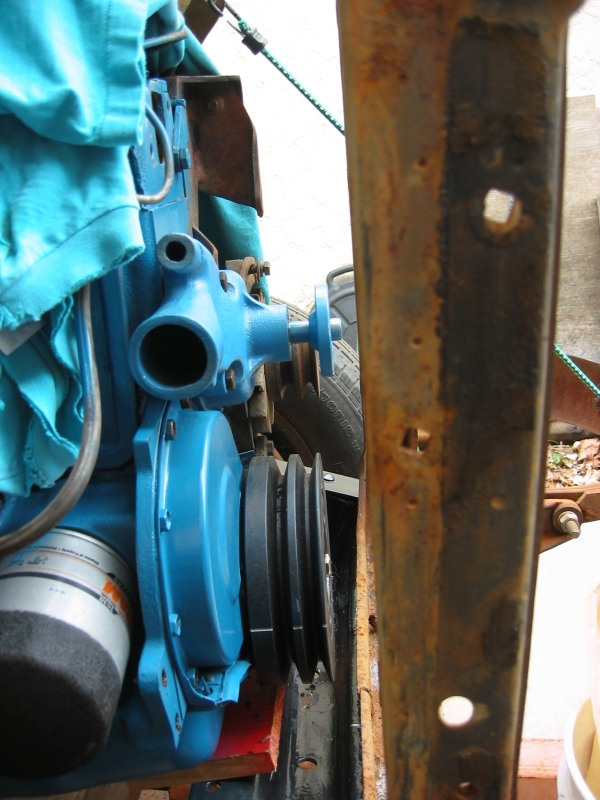
This is a problem you might run into if you have a very tight water pump to radiator clearance in a project car. In my case, swapping from the original 216 to a 292 engine in my 41 Chevy, left me with zero clearance, and that is without using a fan. There are lots of electric fan kits out there these days, so front mounting the fan gets that out of the way, but the water pump is still built long to accommodate the fan blade, and that can be a problem.
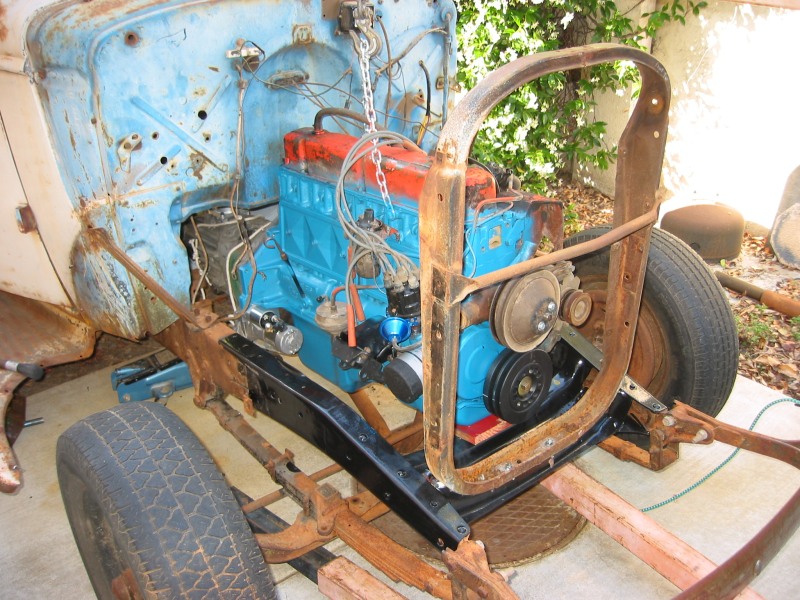
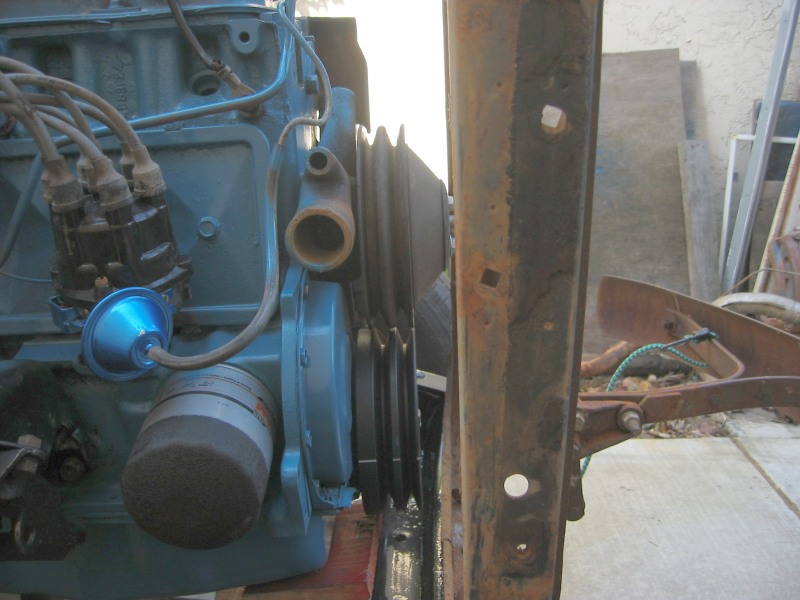
The radiator is not installed in these pictures, but the metal frame you see here is where the it would mount, with the back of the radiator right up against the fan pulley. And though you cant tell in this picture, the shaft of the water pump extends another 3/8 inch or so into the radiator (bad).
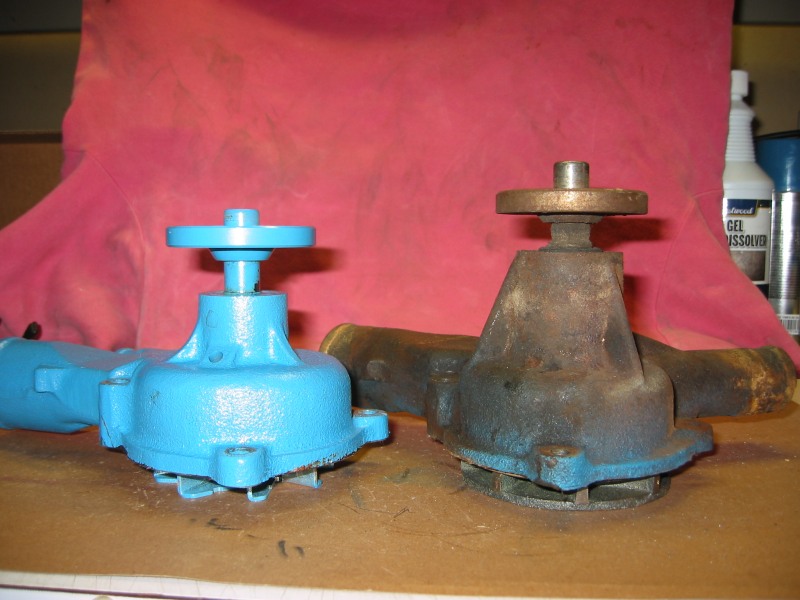
With this particular engine, you are in luck, because Chevy made another engine in this series with a shorter water pump. The blue pump below is from a Chevy 230 engine (also used on early 250 engines). The pump on the right is from the 292. Both have the same bolt pattern and will interchange, with a few issues that I will get to later (one of these should already be obvious from the picture).
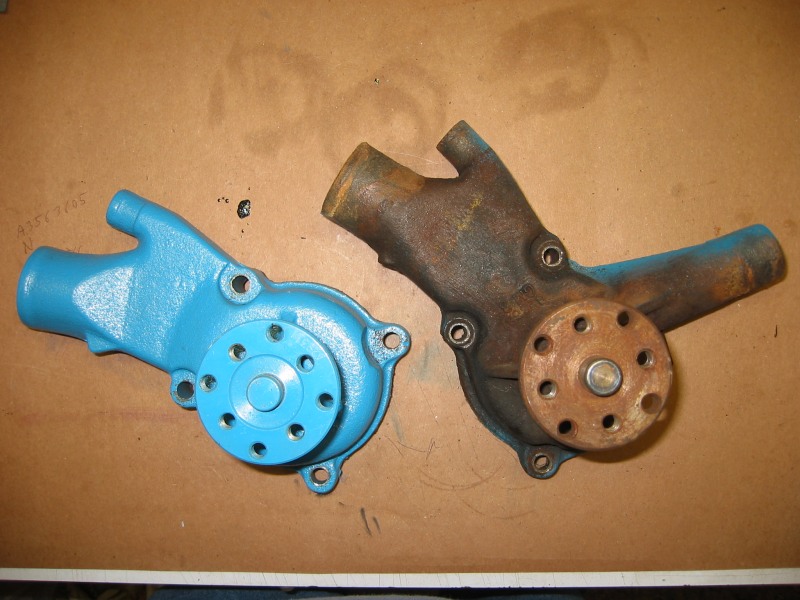
There is 5/8 of an inch difference in the pulley flange location between the two pumps, and another 1/4 inch of stick out on the shaft of the 292 beyond the flange, making the 230 pump a total of 7/8 of an inch shorter.
This should give me just enough clearance so that I wont have to move the radiator (though in hind sight, that might have been easier).
Obviously, you cant interchange the pulleys here (maybe its not obvious, but the lengths are different). To make things worse, the crank pulleys also are in different positions between these two engines, meaning even if you put the 230 pulley on the 230 pump, it still wont line up with the other pulleys on the 292 engine.
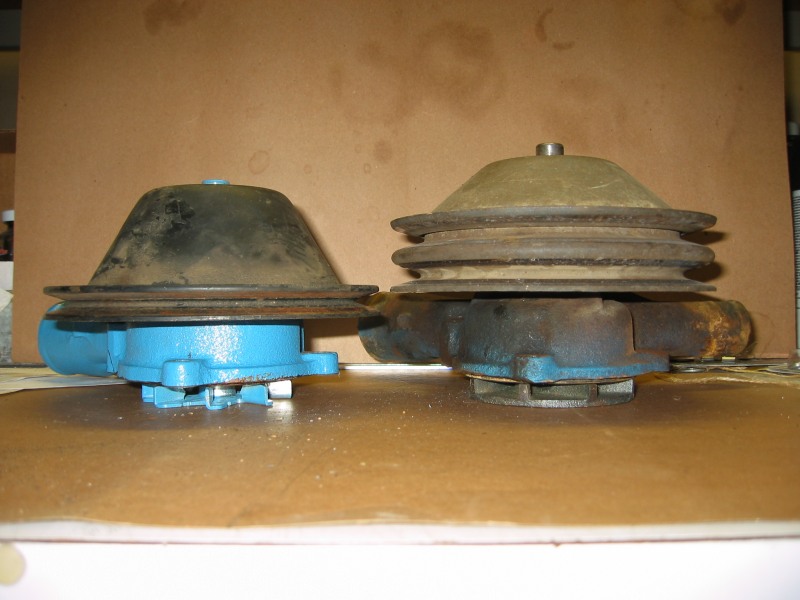
I could make a spacer for the shorter pump to move the 292 pulley out 5/8 of an inch to the proper position, but then I am right back up against the radiator again (that didnt help). What I really want is to cut 5/8 inch off of the front of the pulley, moving the mounting surface down to meet the mounting flange of the short pump. That gets to the title of this document "How to shorten a water pump pulley".
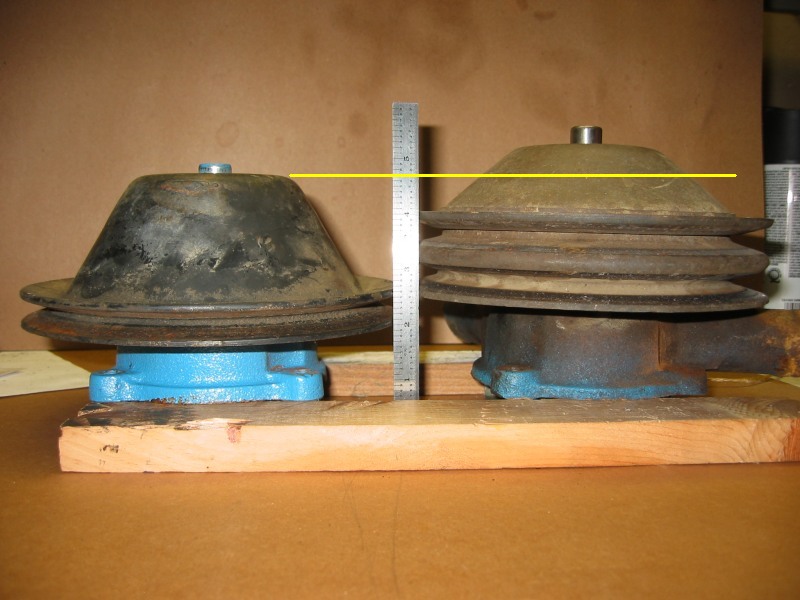
At first glance this seems doable, cut
the end of the pulley off and weld a new piece of metal on the front
with the mounting holes. But if you have ever done much fabrication,
you start thinking about alignment. Weld the new mounting plate 0.010
inch off center (a number impossible to hit without some kind
of
jig) and the pulley will be 0.020 inch out of round (enough to notice).
And then there is front to back wobble! It hopeless!
I started
looking into custom made pulleys (quite expensive, but a realistic
solution). But I kept thinking about how I might be able to modify the
pulley I already have (free, if you dont count your time). Eventually,
I
came up with a solution. It is essentially a jig, but a fairly simple
one. It is still not easy to do, you need to be one who likes to do
things the hard way.
The basic concept is to build that spacer, but build it as two pieces, one of which will become the new mounting surface for the pulley. A well built spacer can maintain the alignment of the pulley and will be used to accurately position the mounting plate. The pulley is not actually cut off until after the new mounting plate is welded in place.
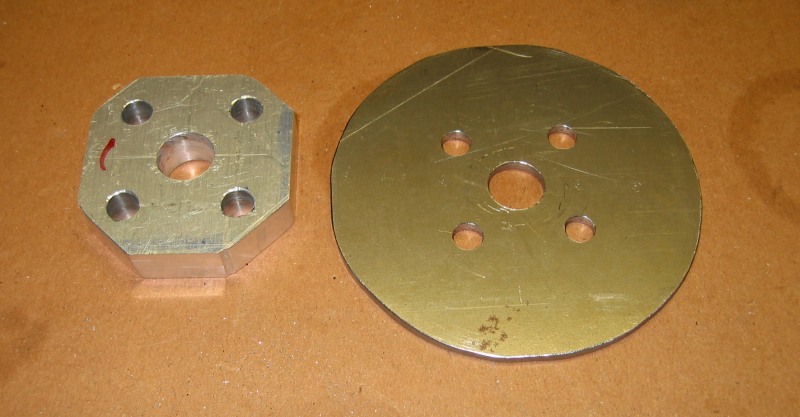
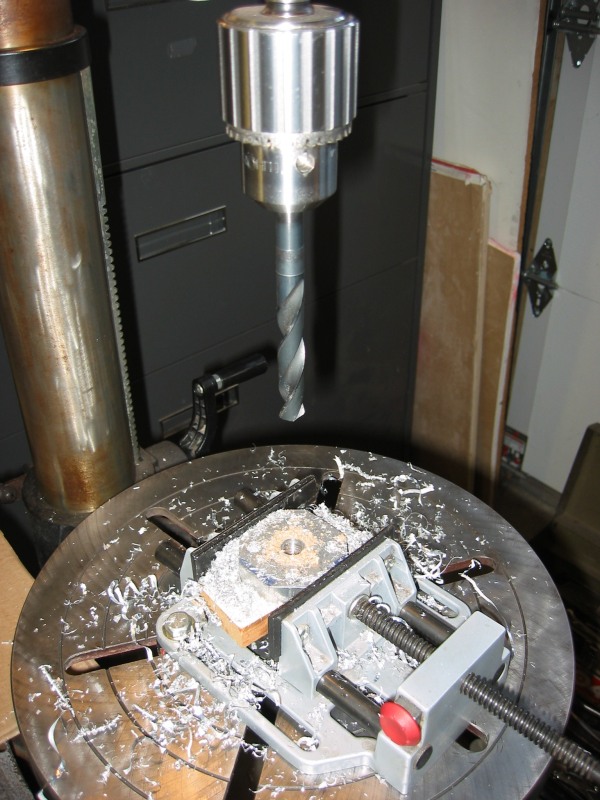
It is the center hole in the spacer that maintains the alignment, so it is important that this be accurately drilled. This must be done on a drill press or mill, you cant get the precision you need by hand. In my case, he water pump pulley shaft is 5/8 inch in diameter, and I try to leave just a few thousandths clearance. I should point out that the four bolt holes do not contribute to the alignment, and so do not need to be super precisely positioned. They can even be drilled a bit oversize if needed.
The water pump shaft does not stick out enough to go clear through all of these pieces, so the shaft must be extended. As luck would have it, I had a piece of precision 5/8 shaft left over from another project, and my spacer is thick enough to provide alignment between the two shafts
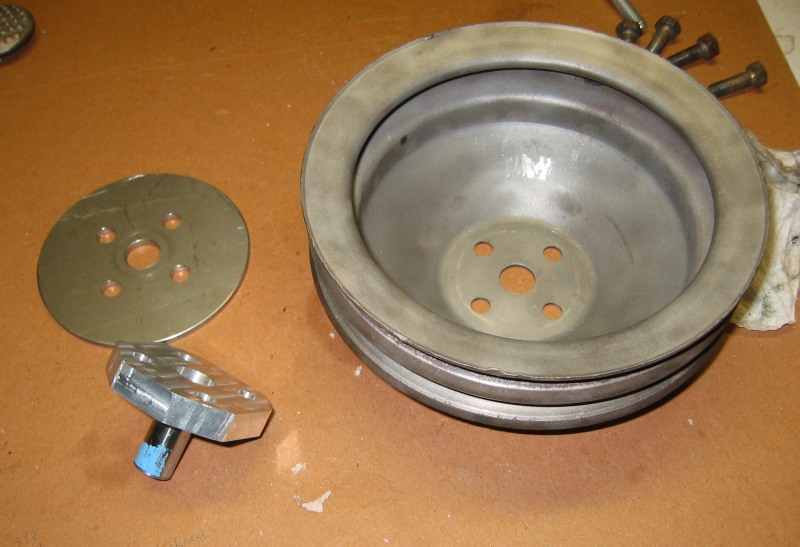
So it stacks up like this: first the new mounting plate sits on the water pump flange, with just a little bit of the shaft sticking through. (Just ignore mister smiley. I dont know how he got in these pictures.)
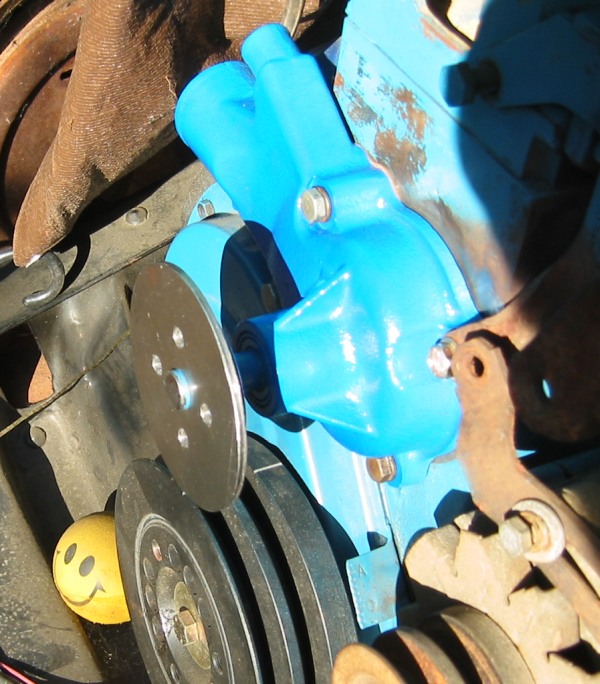
Then the spacer and extension shaft slip on. The fit is tight enough that it holds itself together.
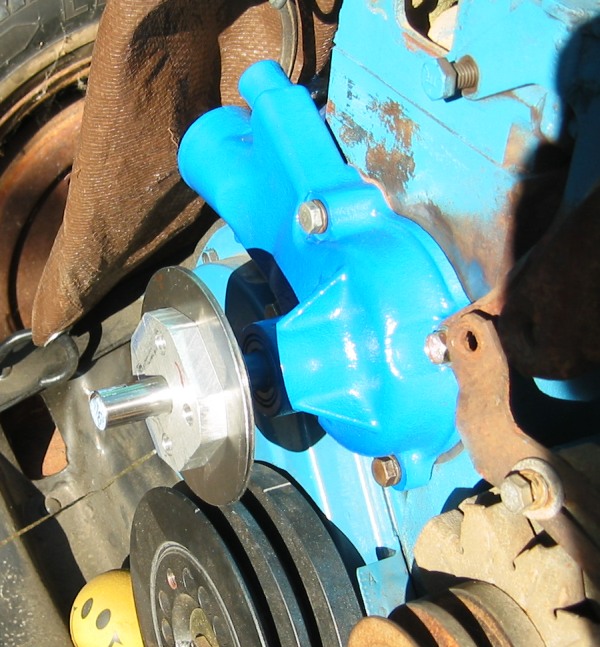
Then the pulley slips on the end. The bolts here are long enough to reach through the spacer and into the water pump flange. At this point, the pulley can be rotated to check for pulley alignment and wobble (and it really shouldnt wobble if the spacer was built well). Do whatever adjustments are necessary to the spacer, and recheck the alignment until it is right.
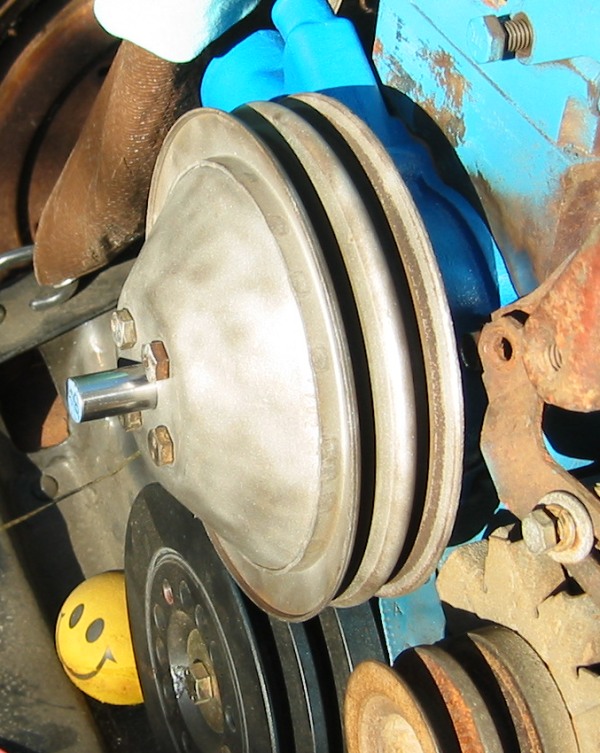
Now take the assembly off of the water pump, and just bolt the sandwich together (mounting plate, spacer, pulley, and extension shaft). It is the spacer and shaft which are maintaining the alignment, so it should align the same on or off the pump. I have been treating the mounting plate as trivial, but it really is not. It also has to have a precision drilled center hole, and the outside diameter needs to be closely fit to the pulley (which is highly dependent on the spacer thickness).
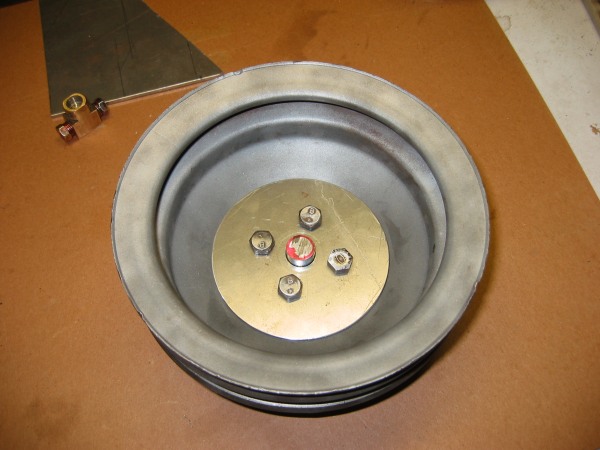
Then tack weld the plate in place, and trial fit it again on the water pump. It should not have changed.
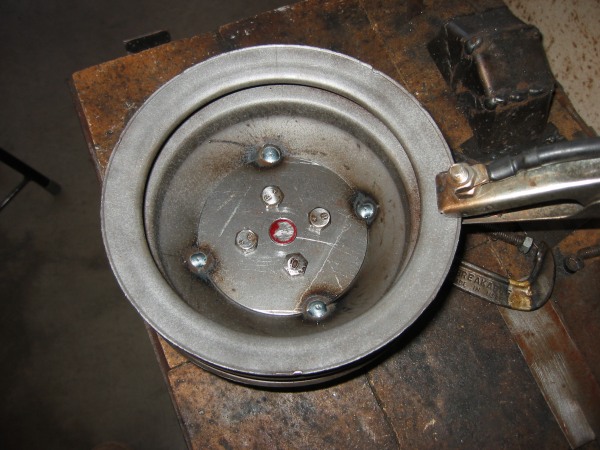
When you are confident in the alignment, bolt the sandwich back together and weld it up solid. I weld about one inch at a time and then move to a different spot. This reduces the chance of heat distortion.
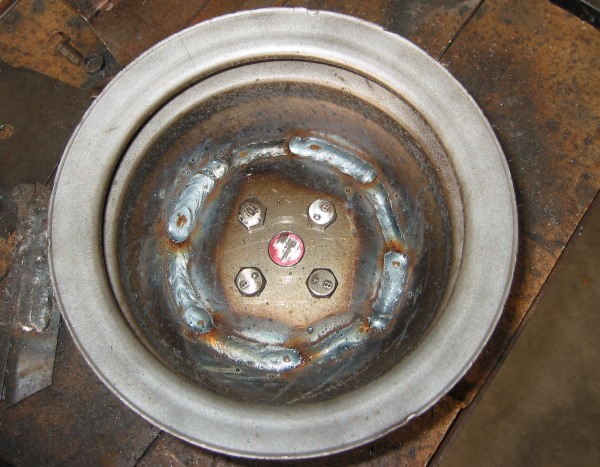
This will leave the spacer welded inside the "sandwich" with no way out. No problem, we are now finally ready to cut the end off of the pulley. I cut it slightly long, just to be safe (you are kind of working blind on this, you cant see exactly where the mounting plate is). Once it is cut off, you could grind the pulley down even with the mounting plate, but I left it sticking out a little. I kind of like the custom look. The bolt heads and the pump shaft will stick out further than this, so it does not effect clearance.
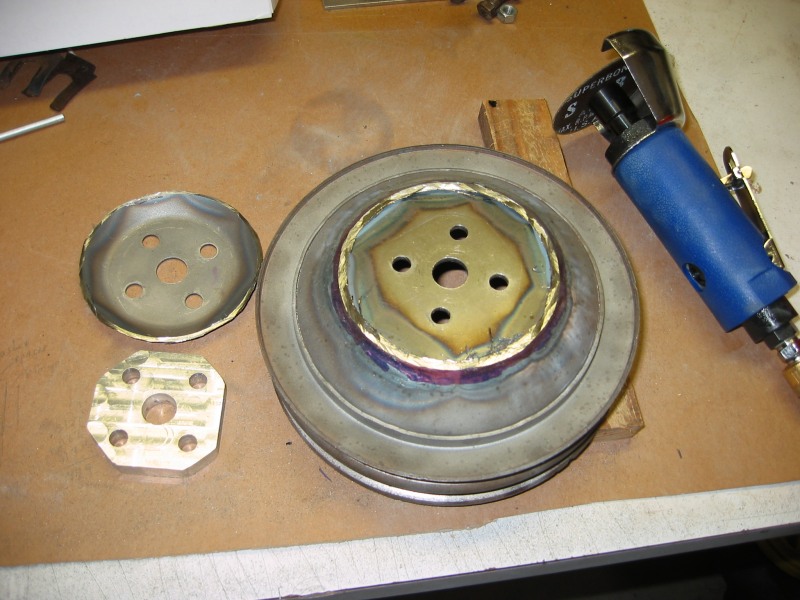
All done except for paint.
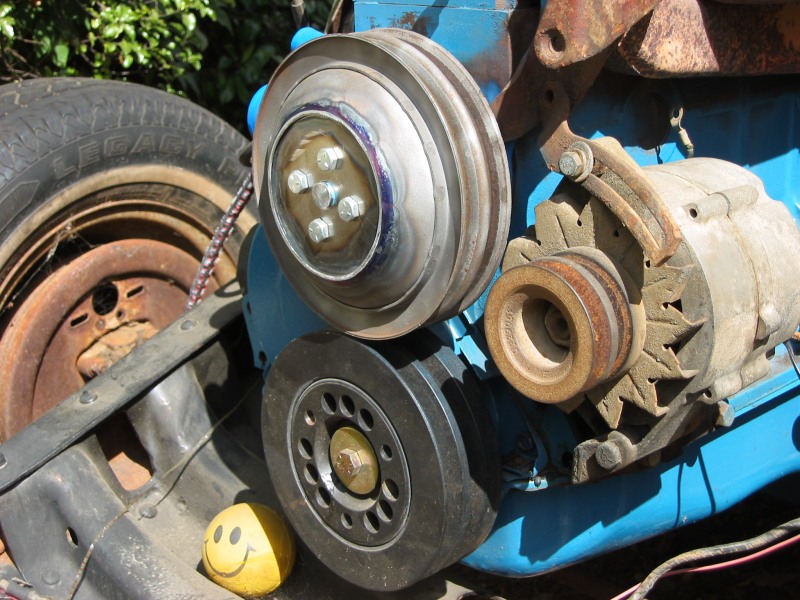
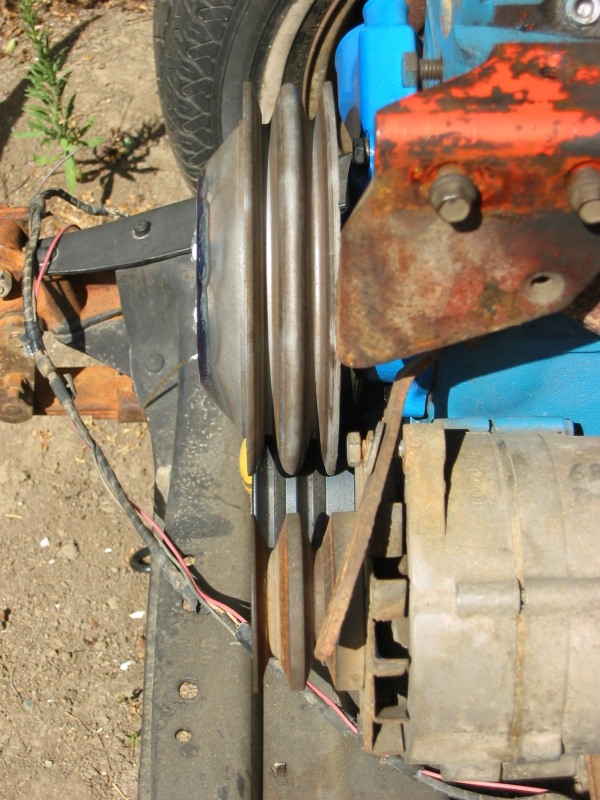
No visible wobble, and alignment is better than many factory pulleys.
-bill
| Back to Menu |